
Scripture records
Meet our patron
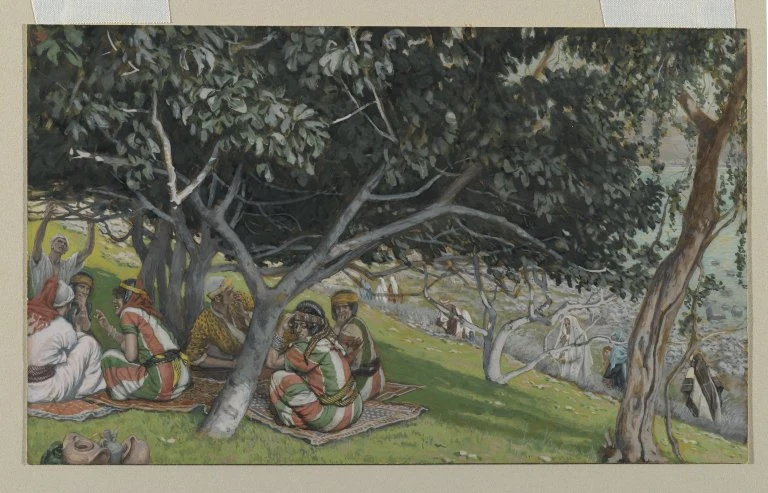
The man beneath the fig tree.
St. Bartholomew was an Apostle, a missionary, and a martyr. But the Church first invites us to meet him as an honest man with a real question—and a heart willing to come and see.
CalledOne of the Twelve
TraditionallyNathanael of Cana
Feast dayAugust 24
InvitationCome and see
A saint for people with real questions
You do not have to pretend your way toward Jesus.
Maybe that is the first gift our patron gives us: permission to bring the question we actually have, not the answer we think a religious person is supposed to give.
Scripture tells us with certainty that Bartholomew was one of the Twelve chosen and commissioned by Jesus. He remained with the apostolic community after the Ascension, persevering in prayer with Mary as they awaited the Holy Spirit.
The Catholic tradition has long identified him with Nathanael of Cana, the candid disciple introduced to Jesus by Philip. The identification is strong and received in the Church’s liturgy, though the Bible never explicitly says the two names belong to the same man.
The Church receives
Bartholomew, traditionally identified with Nathanael.
Strong Catholic traditionTradition remembers
A missionary to the East and a martyr for Christ.
Venerable historical traditionJohn 1:45–51
One honest question opened into a whole new life.
The Church reads Nathanael’s call on the Feast of St. Bartholomew. It is not merely a story about how one Apostle met Jesus. It is a map for how any of us might meet him now.
“Before Philip called you, I saw you under the fig tree.”Jesus to Nathanael · John 1:48
An honest question
Nathanael does not pretend to be impressed. He says what he actually thinks: “Can anything good come from Nazareth?” Faith does not begin with performance. It begins with the truth.
A personal invitation
Philip does not win an argument. He offers three words: “Come and see.” Christianity still travels this way—from one person who has met Jesus to another who is willing to take a step.
Already seen
Before Nathanael recognizes Jesus, Jesus reveals that he already knows Nathanael. The encounter begins not with our search for God, but with the startling discovery that God has been looking at us with love.
A heart without duplicity
Jesus sees no duplicity in him. Nathanael is skeptical, perhaps, but not cynical. His question remains open to grace. Integrity becomes the doorway through which faith enters.
A confession
The questioner becomes a believer. Nathanael names Jesus as Son of God and King of Israel. An honest encounter asks for an honest response.
Heaven opened
Jesus promises something greater: heaven opened. Christ himself is the meeting place between God and humanity—the living bridge that brings us home to the Father.
The greater promise
Jesus does not merely answer Nathanael’s question. He opens heaven.
The ladder in Jacob’s dream has become a person. In Christ, heaven and earth meet, God draws near, and the restless human heart finds the way home.
The quiet apostle
Faithfulness does not need an audience.
Under the name Bartholomew, Scripture records no individual sermon, miracle, or dramatic scene. And still the Church names him an Apostle—a foundation stone of the heavenly city.
Most discipleship looks like this. It is the prayer no one hears, the mercy no one applauds, the ordinary duty offered with love. A life can belong completely to Jesus without becoming famous. Hidden does not mean insignificant.
Our patron reminds us that holiness is not a performance. It is an undivided heart, received by Christ and poured out for others.
A patronal character
What kind of parish bears his name?
Not one with all the answers. One willing to bring its questions to Jesus—and invite others to do the same.
Honest
We tell the truth about our questions, wounds, hopes, and need for grace.
Invitational
We do not pressure people into faith. We say, with confidence and friendship, “Come and see.”
Undivided
We ask Christ for hearts without duplicity—integrity in worship, relationships, work, and service.
Missionary
Encounter becomes witness. What we have received is meant to be carried beyond our own doors.
Apostle and martyr
What tradition remembers.
The earliest facts are few. The memories are ancient. A responsible telling can honor both without pretending they carry the same historical certainty.
Early Church tradition
Sent toward the East
Ancient Christian writers associate Bartholomew with missionary preaching in a region they called “India.” That word covered a much wider geography than the modern nation, so his exact route cannot be reconstructed.
Armenian tradition
An apostle to Armenia
Armenian Christians venerate Bartholomew and Jude Thaddeus as apostolic evangelizers. The historical details remain uncertain, but Bartholomew’s place in Armenia’s Christian memory is profound.
Venerable tradition
A witness to the end
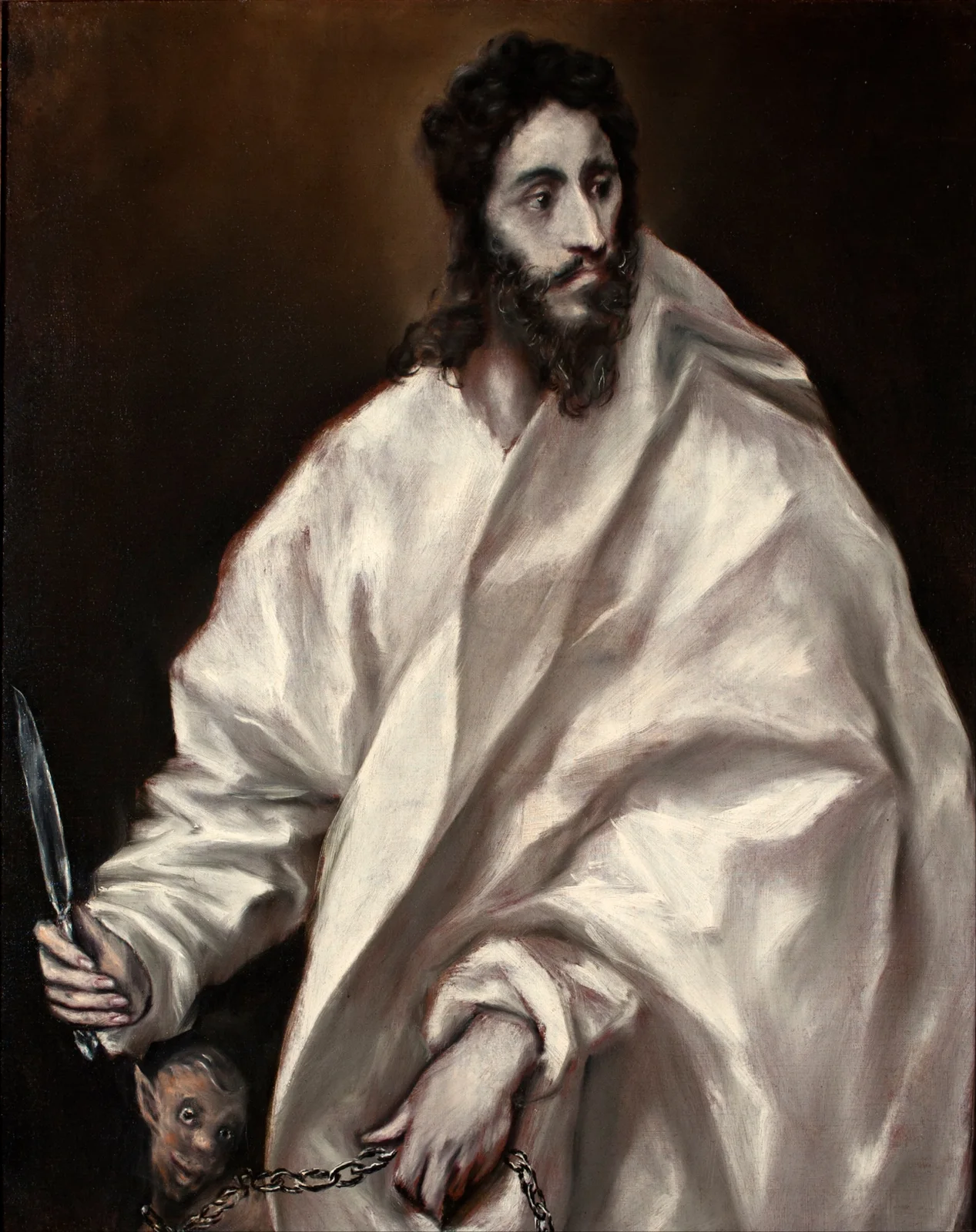
The familiar Western account says that Bartholomew was flayed alive, which explains the knife in Christian art. Scripture does not record the circumstances of his death, and later accounts differ.
Read more deeply
Scripture first. Tradition honestly told.
These primary Catholic sources ground the story presented here and make clear where certainty ends and tradition begins.
The invitation is still open
Bring the question. Come and see.
You do not need to have faith figured out before you walk through the door. Take one honest step toward Jesus. We would be honored to take it with you.